Comparing Two Fine Sakés
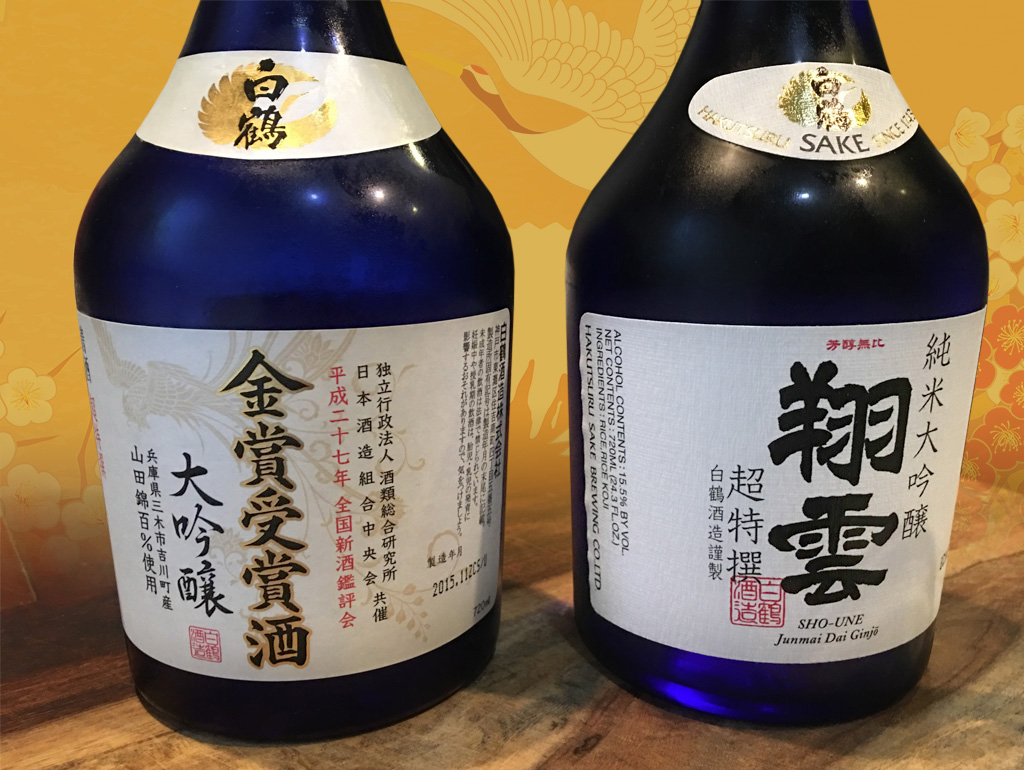
This was an interesting experiment pitting Junmai Daiginjo against Daiginjo from the same brewer, Hakutsuru, to discover what differences I could perceive from Saké with and without added alcohol.
Granted, Daiginjo as a grade, has only a very small amount of alcohol added, however I did noticed on the palate, there was a discernible presence of flavors and the sweetness seemed more pronounced.
The Junmai Daiginjo, without the added alcohol, seemed more demure for both the nose and palate experience. By no means did it strike me as inferior in any way, instead, I sensed a kind of confidence that this Saké did not try to shout out its greatness, rather, it simply showed its many qualities by its assured elegance.
I can see myself enjoying the Daiginjo as a sipping beverage, while Junmai Daiginjo would make a wonderful accompaniment to many food pairings.
2015 Gold Award, Japan National New Saké Competition, Hakutsuru Saké, Daiginjo
Kobe, Japan
Polish Rate (Seimaibuai): 38%
Rice: Yamada Nishiki
Alcohol: 17%
SMV: +3
Acidity: 1.3%
Amino Acid: 0.9
Size: 720ml
Toji: Mitsuhiro Kosa
Tasting notes:
Nose: Delicate scent of banana in the foreground with hint of salinity in the background that resembles a fresh sea breeze in the Summer time.
Palate: Very ripe apple pear and melon but with enough acidity to keep it fresh and enjoyable. Well balanced with decadent smoothness on the palate that has long finish. Enjoy chilled or at room temperature.
Hakutsuru Saké, Junmai Daiginjo, “Sho-Une”
Kobe, Japan
Polish Rate (Seimaibuai): 50%
Rice: Yamada Nishiki
Alcohol: 15.5%
SMV: +2
Acidity: 1.5%
Amino Acid:
Size: 720ml
Tasting notes:
Nose: Murmuring scent of banana, melon, and peach.
Palate: Light and unassuming yet has a luscious mouthfeel. Hint of apple pear that has clean finish that will pair well with any light appetizers, fish, and salad dishes. Enjoy chilled or at room temperature.